CASE STUDY
An ambitious family-owned laundry seeks lower energy costs
How can a large laundry structurally reduce water and energy costs?
Discover how Gouge Linen and Garment Services in Australia is achieving energy savings and more...
Gouge’s Story
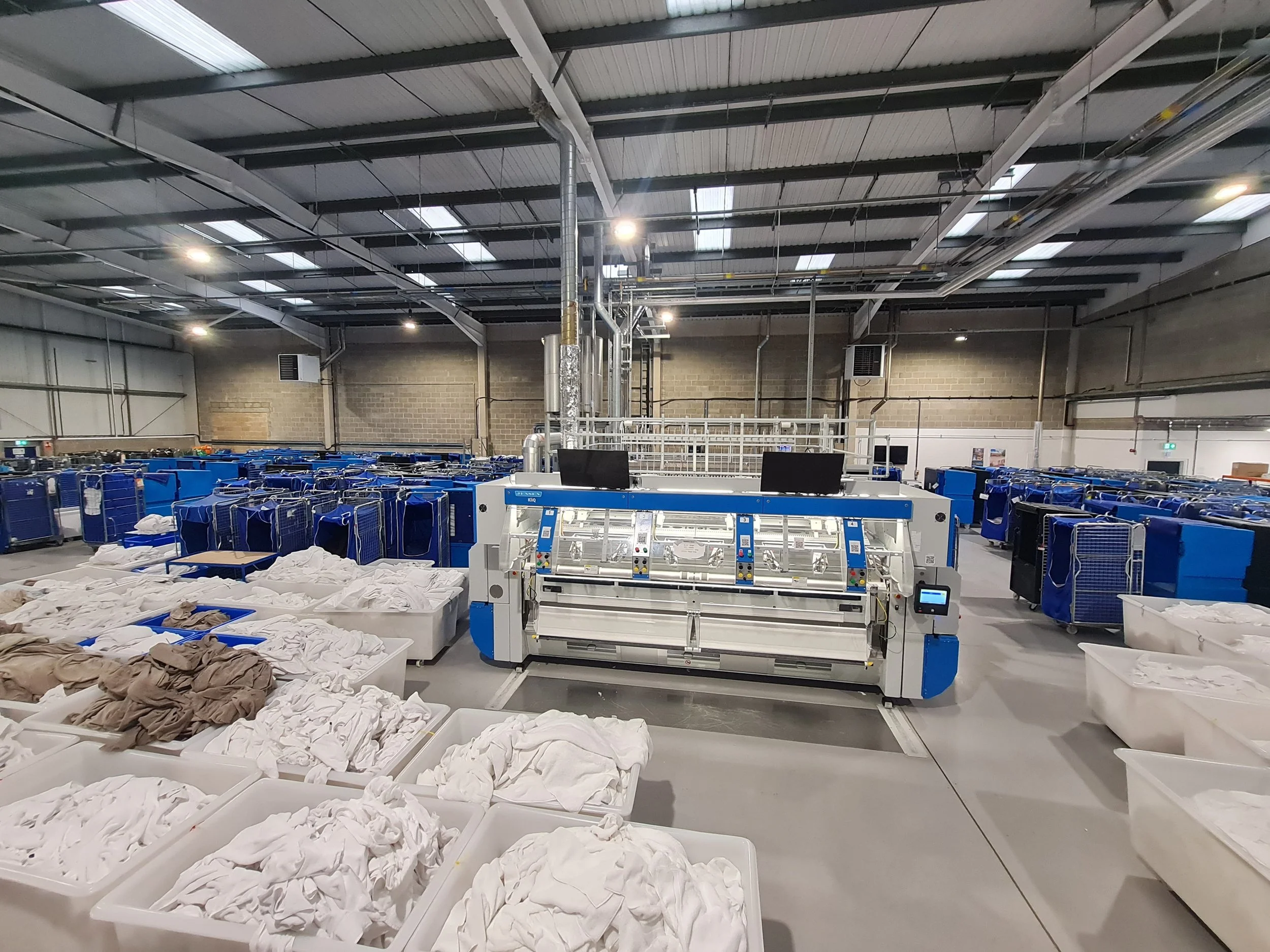
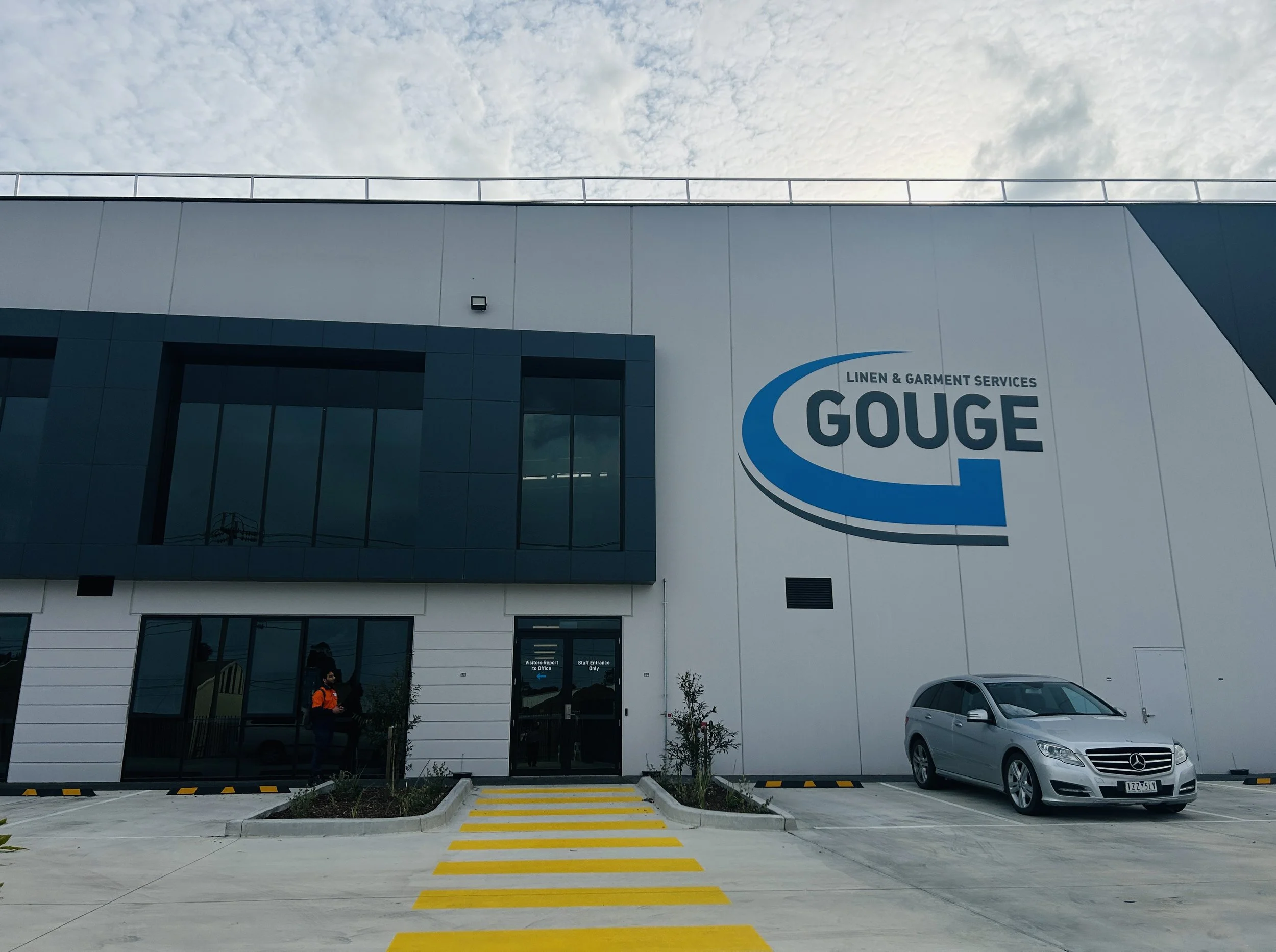
Gouge Linen is a leading commercial laundry in the Australian state of Victoria. Established as a retail dry cleaning business in 1945, the company has been owned by the Priestly family since 1989. Through organic growth and strategic acquisitions, it has developed into a major laundry operation.
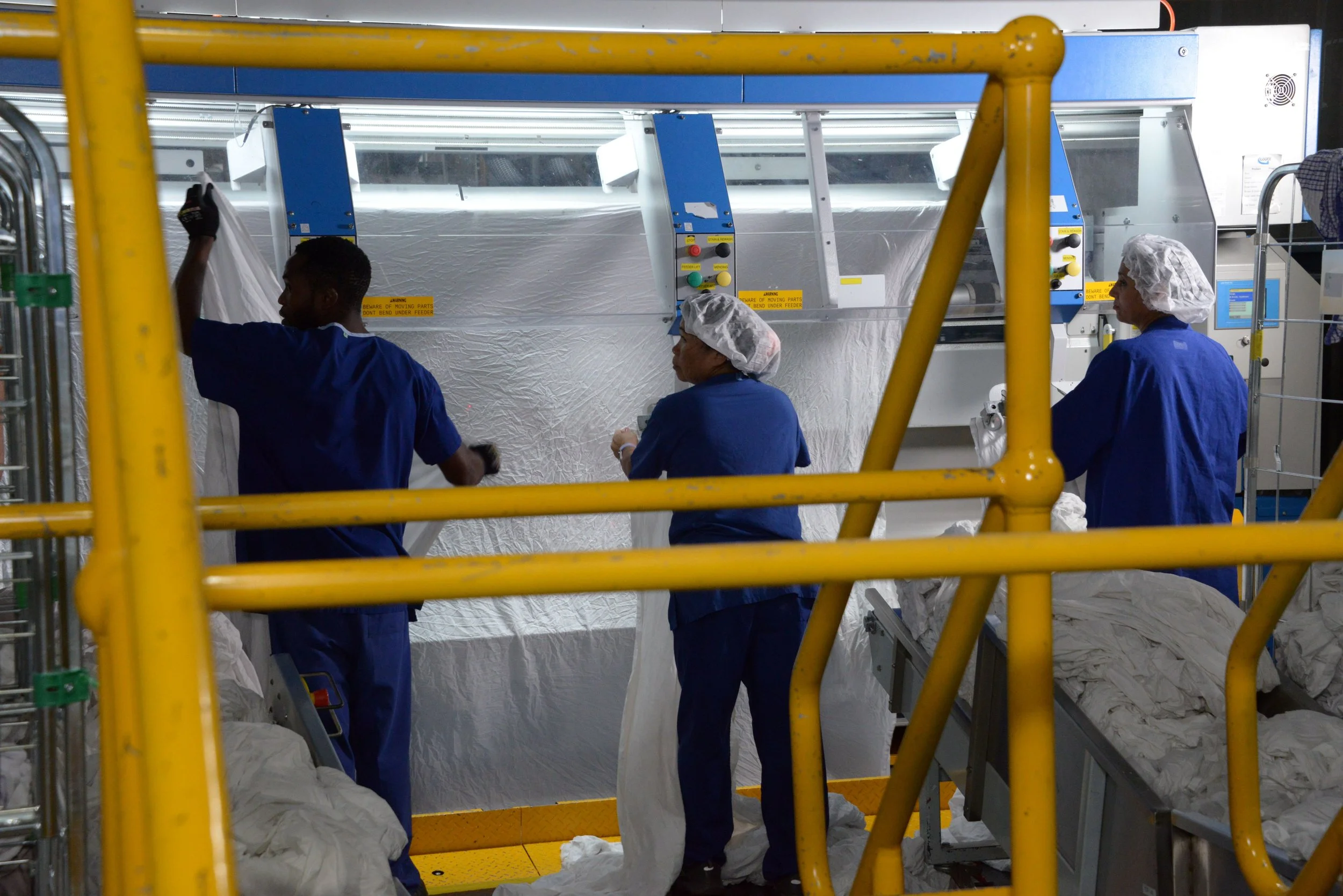
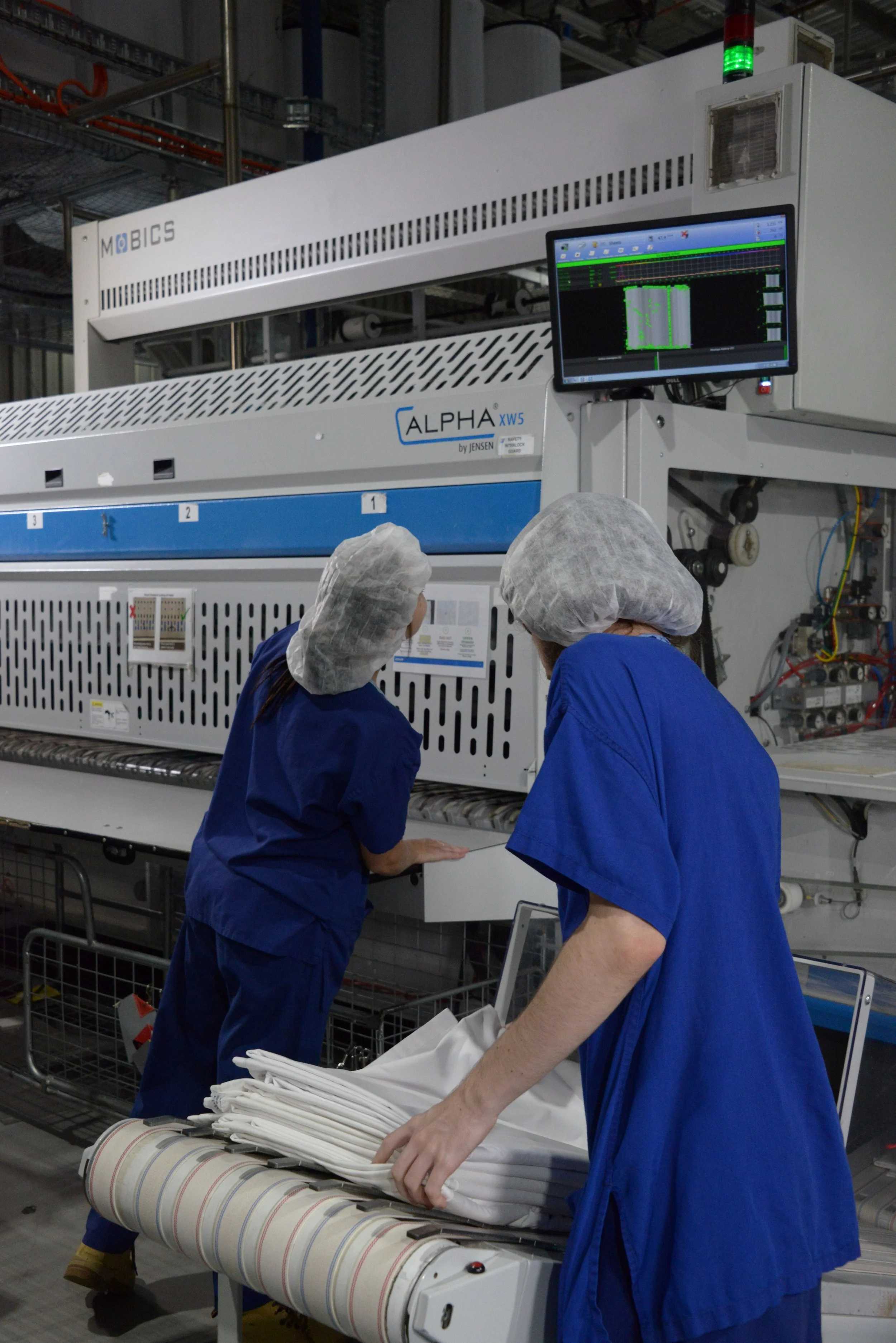
Gouge headquarters is in Mooroopna, just north of Melbourne, where approximately 300 tonnes of laundry are processed each week for customers in the healthcare, hospitality and workwear sectors. The facility operates three shifts a day, five days a week.
More recently, Gouge has opened a state-of-the-art greenfield facility at Geelong, about an hour’s drive south-west of Melbourne. Processing approximately 150 tonnes per week, it primarily serves healthcare and hotel customers. Some production is planned to move from Mooroopna to Geelong, creating additional capacity and breathing space at the established site.
The challenge: Reducing energy costs and environmental impact
Like many commercial laundries, Gouge faces the ongoing challenge of high and unpredictable energy costs. Improving energy efficiency has therefore become an increasingly important priority.
The company is equally committed to reducing the environmental impact of its operations and looks for practical ways to reduce its carbon footprint.
Having already implemented basic energy-saving measures such as eliminating unnecessary energy use and encouraging good energy-management practices on the factory floor, Gouge wanted to go a step further. The goal was to achieve substantial, lasting savings without compromising laundry quality or hygiene.
The solution: Recycling process water and the energy it contains
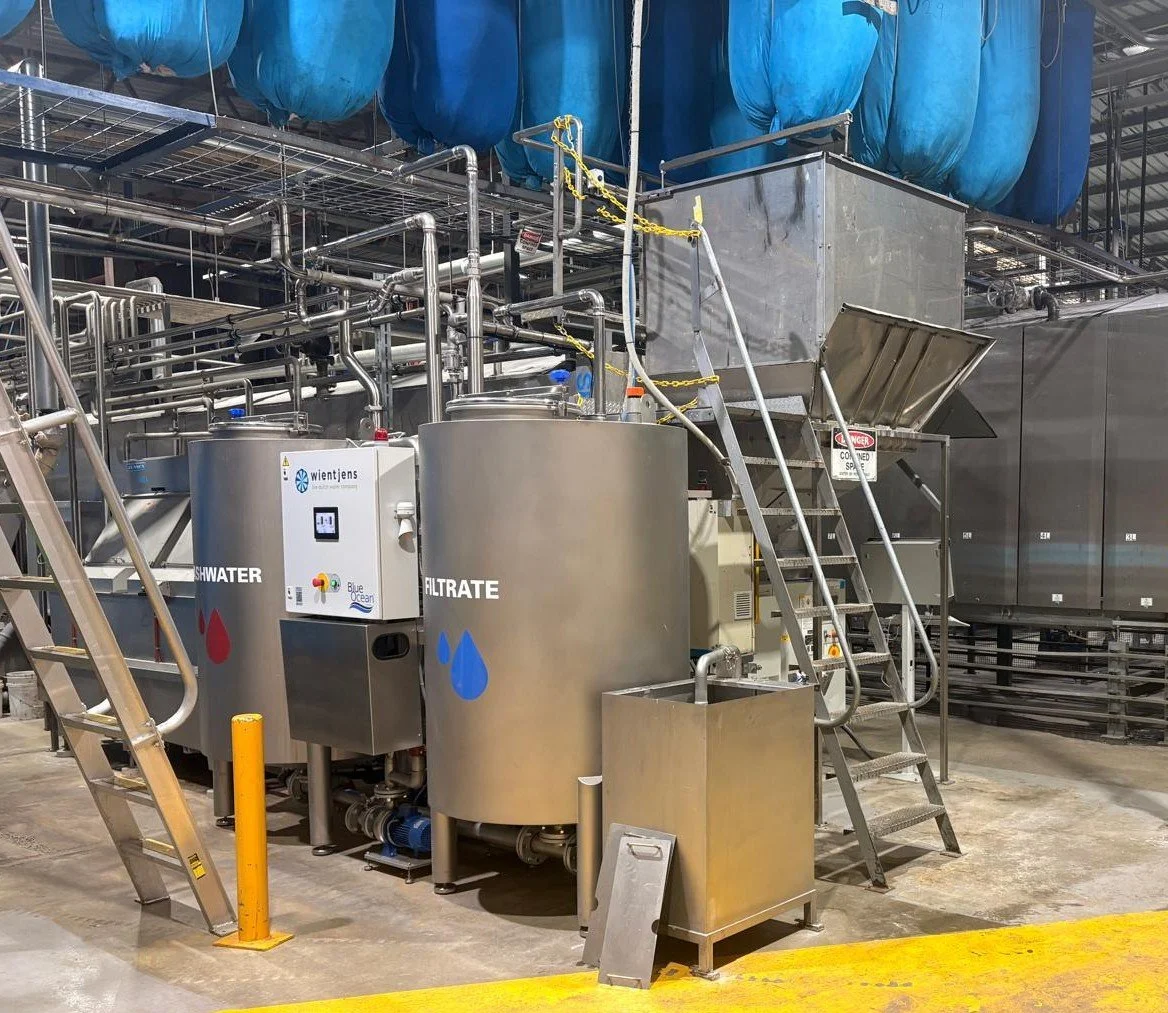
Following recommendations from Wientjens’ partners Kaneo and P&G International, Gouge Linen chose to recycle its process water. This allows both the water and the valuable energy it contains to be reused in the washing process.
The solution comprises Wientjens Blue Ocean Filters with AquaDrains for the tunnel washers at both locations supplemented by an AquaBatch unit at Geelong.
The expected savings are around 50% in water and related energy costs, without compromising finished quality or textile hygiene.
The AquaDrain also delivers an additional environmental benefit by capturing microfibres filtered from laundry wash water, before these can degrade into microplastics.
Installation: no production downtime
Minimising disruption during installation was essential, neither laundry could afford significant production downtime.
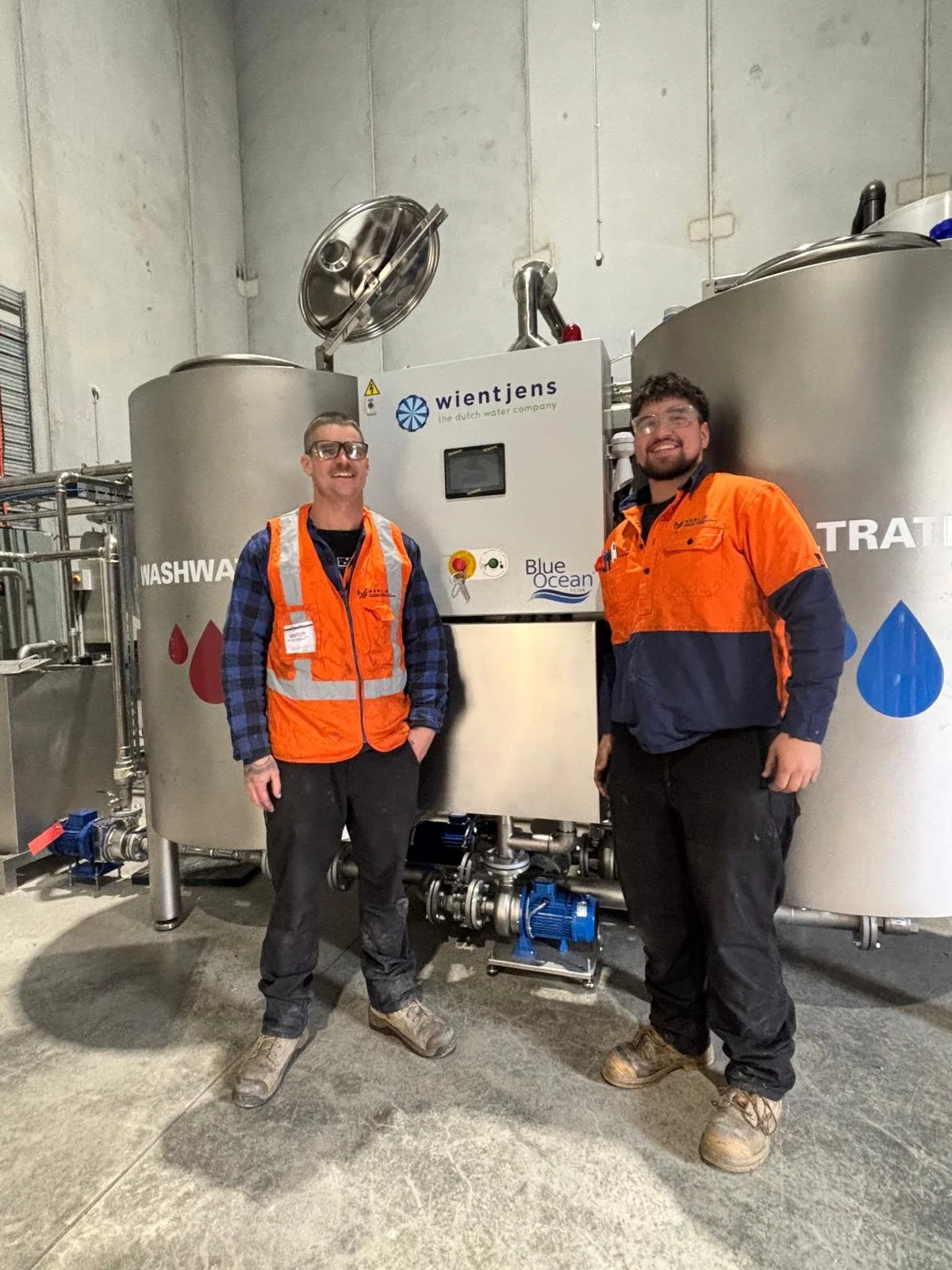
The equipment was installed by Kaneo, assisted by Gouge’s own contractor.
Commissioning at Geelong by P&G International took just 2 days for the 3 tunnel washers in Geelong. Longer was needed in Mooroopna (about 5 days) due to a more complex configuration of tunnel washers there. This was time well spent. Fine-tuning the Blue Ocean Filters parameters ensures optimal performance in combination with the tunnel washers in each site’s specific setup.
Importantly, installation and commissioning were completed during normal working hours, with no production downtime.
The process knowledge and support provided by chemistry supplier Ecolab were also valuable throughout this phase.
How the Blue Ocean Filter works
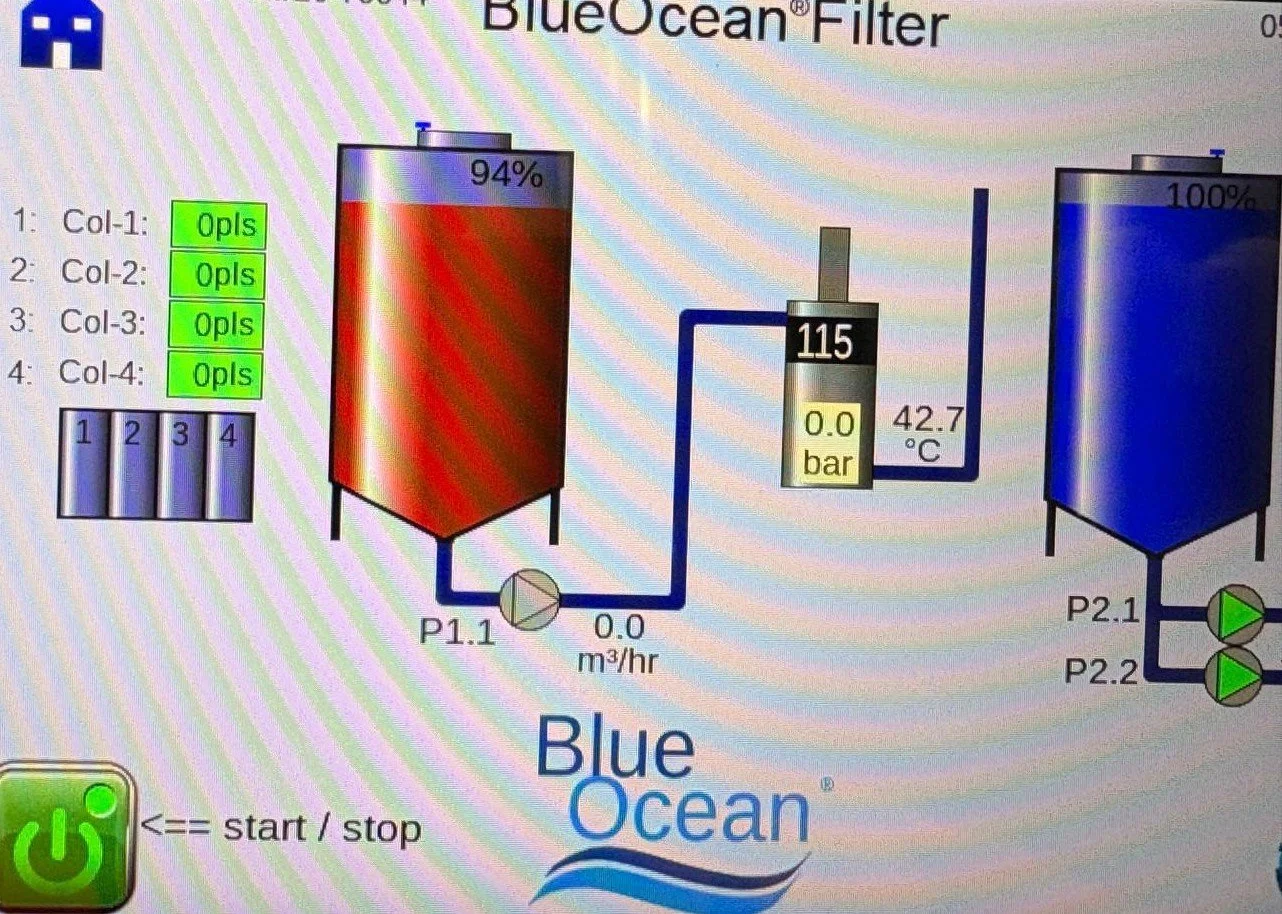
The Blue Ocean Filter treats hot wash process water so that both the water and its energy can be re-used in the wash process.
With a capacity of 15 m³/hour, the Blue Ocean Filter at Mooroopna treats process water from four tunnel washers. In Geelong, the set-up is similar, with the AquaBatch added for a fourth tunnel washer.
Wash water from the pre-wash and main wash compartments of the laundry tunnel washers is pumped to the Blue Ocean Filter Wash Water buffer tank. From here it passes through a stack of finely grooved filter rings. Tis deep filtration process removes solid particles such as (micro)fibres, sand, hairs and other insoluble matter.
The unit’s automatic self-cleaning function discharges the collected solids to the AquaDrain where they are captured in a dedicated filter bag.
The filtered water, or filtrate, loses little heat during the filtration process. It is then stored in the Blue Ocean Filter’s Filtrate tank until required in the production process.
The system operates as a closed loop. Laundry-specific settings, including wash temperature, together with ongoing monitoring help ensure that textile hygiene standards are maintained. The equipment is also designed to allow easy chemical and thermal disinfection according to the laundry’s requirements.
This enables Gouge Linen to safely re-use valuable process waterinstead of continually relying on fresh water for washing.
An additional benefit: capturing microfibres
The AquaDrain delivers more than just cleaner discharge. It also helps prevent microplastics from entering the wastewater stream.
Fibres, including synthetic fibres, shed from textiles at an early stage in the wash process when chemistry is added and water temperatures rise (pre-wash and main wash compartments). Because the textile fibres are still relatively long at this point, they are easier to trap and deep filtration is the perfect technique to achieve this.
If left in the wash process, repeated mechanical action in the tunnel washer causes microfibres to degrade into progressively smaller particles, eventually becoming microplastics. Smaller microfibres from mixed/synthetic textiles are much more difficult and expensive to capture at the later stages of the wash process and generally end up being discharged to sewer as microplastics.
Once (micro)fibres, sand, hairs etc are captured in the AquaDrain, the material can be disposed of appropriately. This is a big step in reducing microplastics pollution in Gouge’s wastewater and reducing BOD and COD in laundry discharge water.
Deep filtration offers laundries a practical way to remove significant quantities of microfibres (plastics) that would otherwise simply be discharged to sewer.
Measurements conducted for Wientjens by an independent lab indicated that up to 95% of microplastics by volume may be captured from laundry wash water by such deep filtration.
When combined with Wientjens water-recycling technology, the AquaDrain therefore provides a practical and economical way to reduce microplastic discharge from commercial laundry operations.
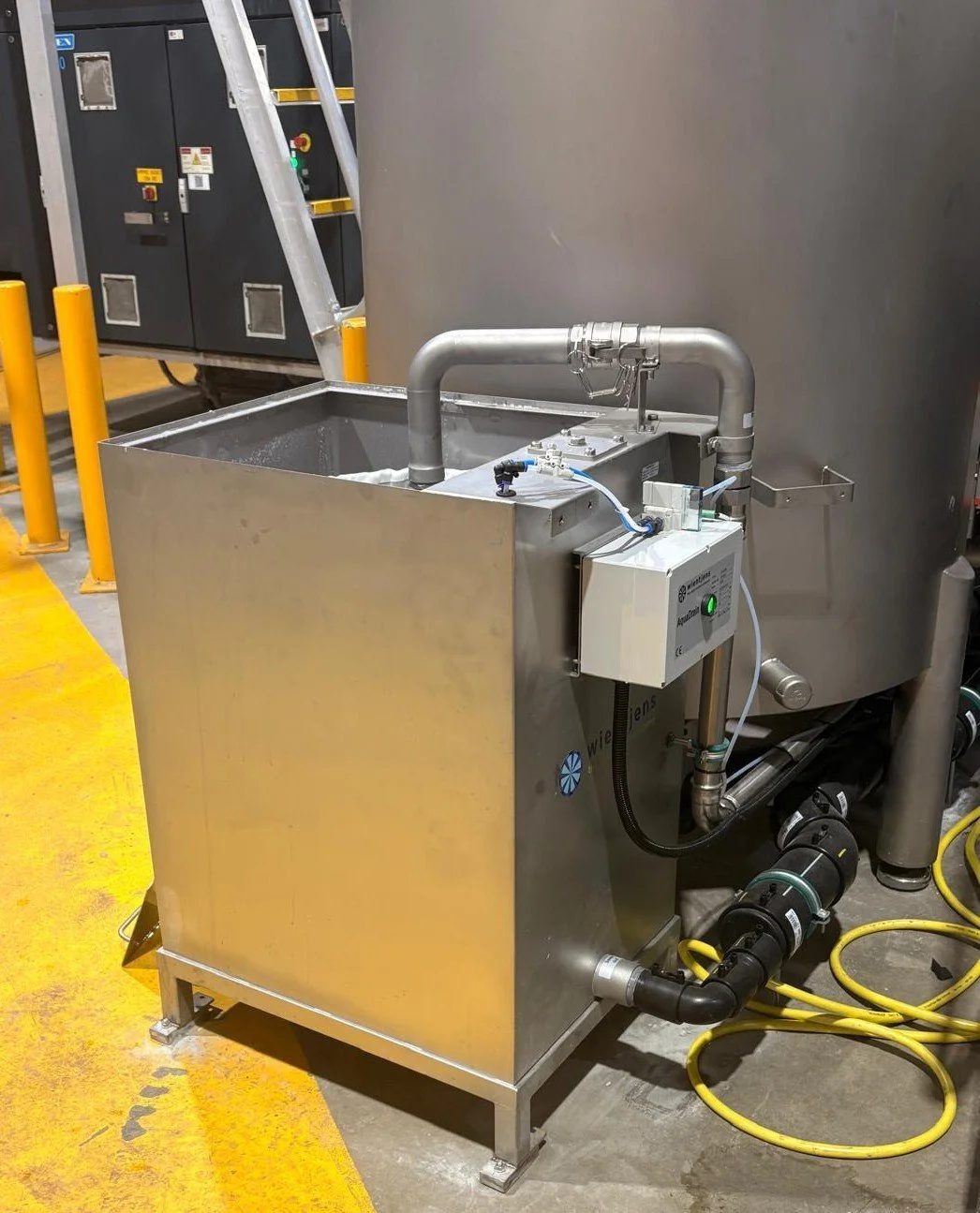
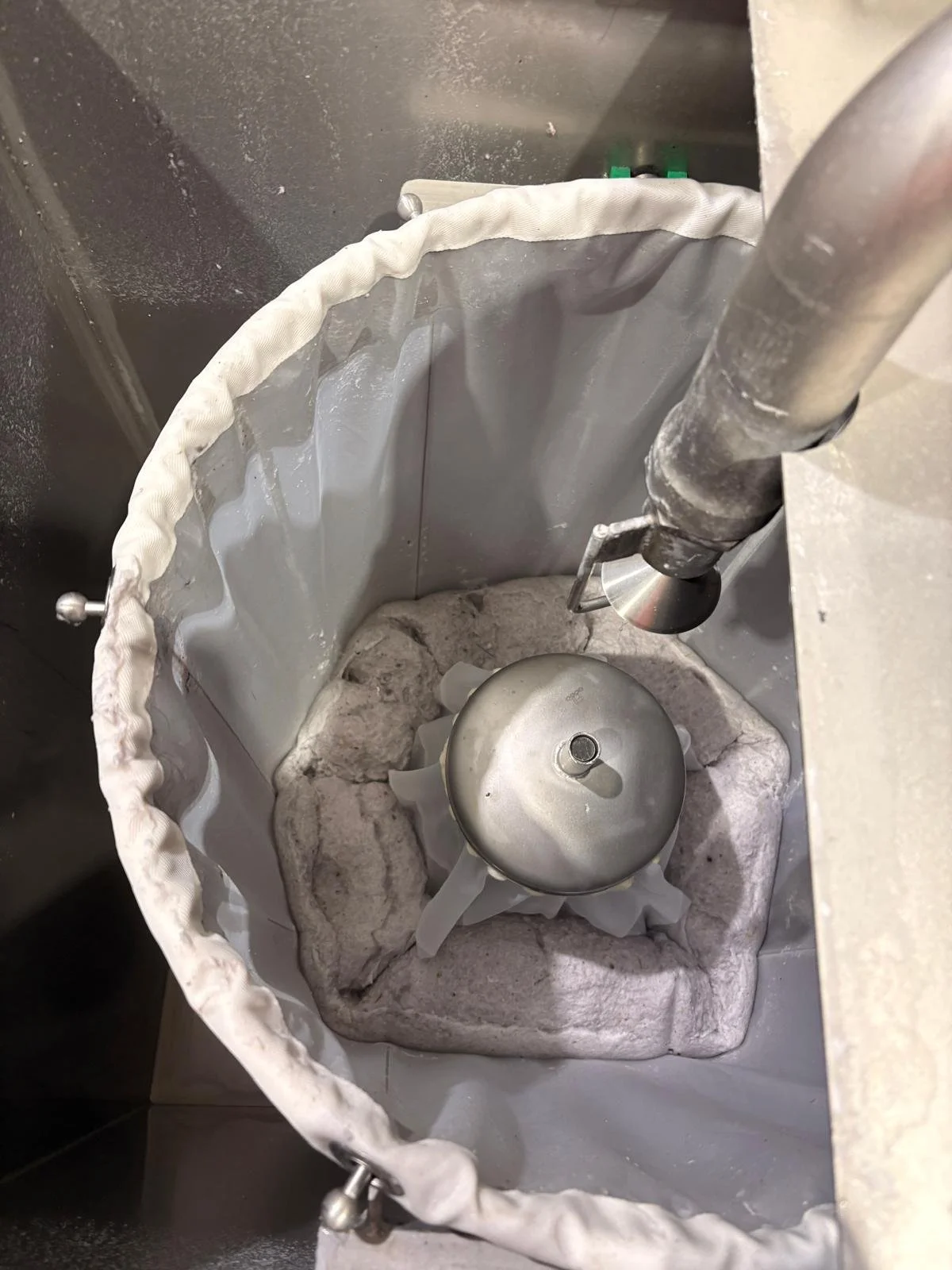
left: The AquaDrain
right: The waste - including microfibres - collected in its filter bag
The results: significant savings from day one
Although the Blue Ocean Filters with their AquaDrains had been operating for less than 3 monthsat the time of writing, Gouge Linen was already very pleased with the results.
Both sites have achieved substantial energy savings. In two months, around 272,000 kWh less energy has been used compared with estimated usage without the Blue Ocean Filters.
Water savings have also been impressive:
Geelong: Water consumption per kilogram of laundry has reduced by 50% across all tunnel washers, reaching as much as 60% for the largest tunnel washer. Just two months after startup, the average water usage in Geelong was an exemplary 2.96 L/kg.
Mooroopna: average water consumption per kilogram has decreased by 40% across all tunnel washers. Further savings are expected when the 4th tunnel washer is connected to the Blue Ocean Filter there. That will further lower the current average water usage of 3.2 L/kg.
Gouge expects that the equipment in each location will have paid for itself in less than 2 years.
Steve Argus, General Manager of Facilities for the group, noticed the energy recovery benefit almost immediately
“When I felt the heat of the filtered water in its tank, I understood that this was real energy that we’ll be reusing”
Maintenance requirements have also been pleasantly straightforward. When asked about maintaining the equipment, Steve’s response was simple:
“Not much to it!”
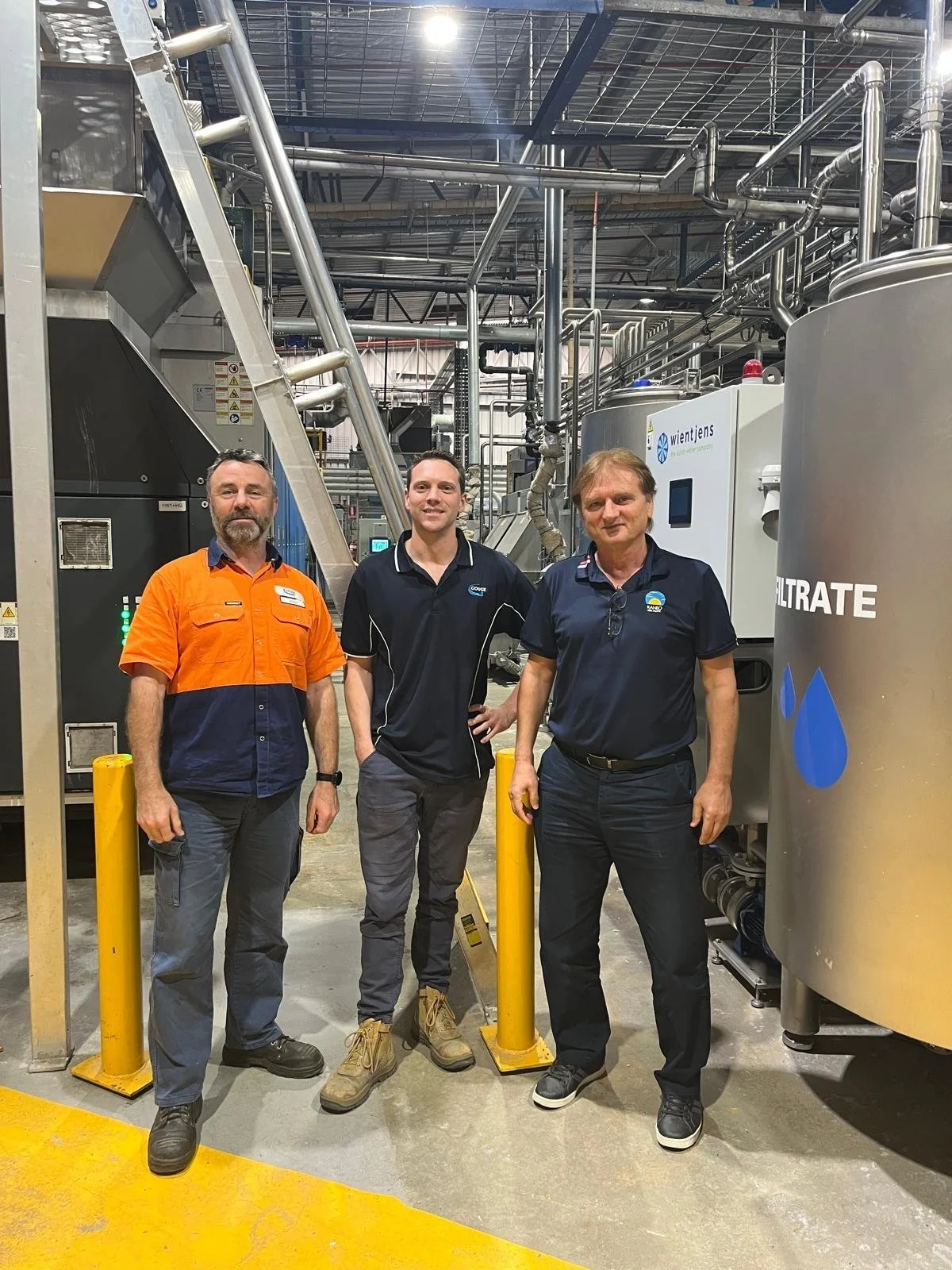
Plant manager
From l. to r.: Plant manager Steve Argus together with [name?] and Lou Dimovski of Kaneo
Financial savings with environmental benefits
For Gouge Linen, the investment is about more than reducing operating costs. The technology also supports the company's broader environmental ambitions.
The initial results for just the first 2 months of full equipment operation include:
272,000 kWh less energy consumed
Over 40% reduction in fresh water consumption
More than 5,500 m³ fresh water saved
Over AUS $47,500 in total energy and water cost savings
Approximately 40,500 kg reduction in carbon emissions
Additional environmental benefits include:
Removal of microfibres from the filtered water, helping reduce microplastics discharge
Lower BOD and COD levels in discharge water
For Gouge Linen, the result is a more resource-efficient operation with lower exposure to water and energy costs. Gouge’s environmental footprint is lighter, while its laundries are better equipped to meet future challenges around energy and water availability.
Explore our full range of water and energy recycling products here.
Related Case Studies